 English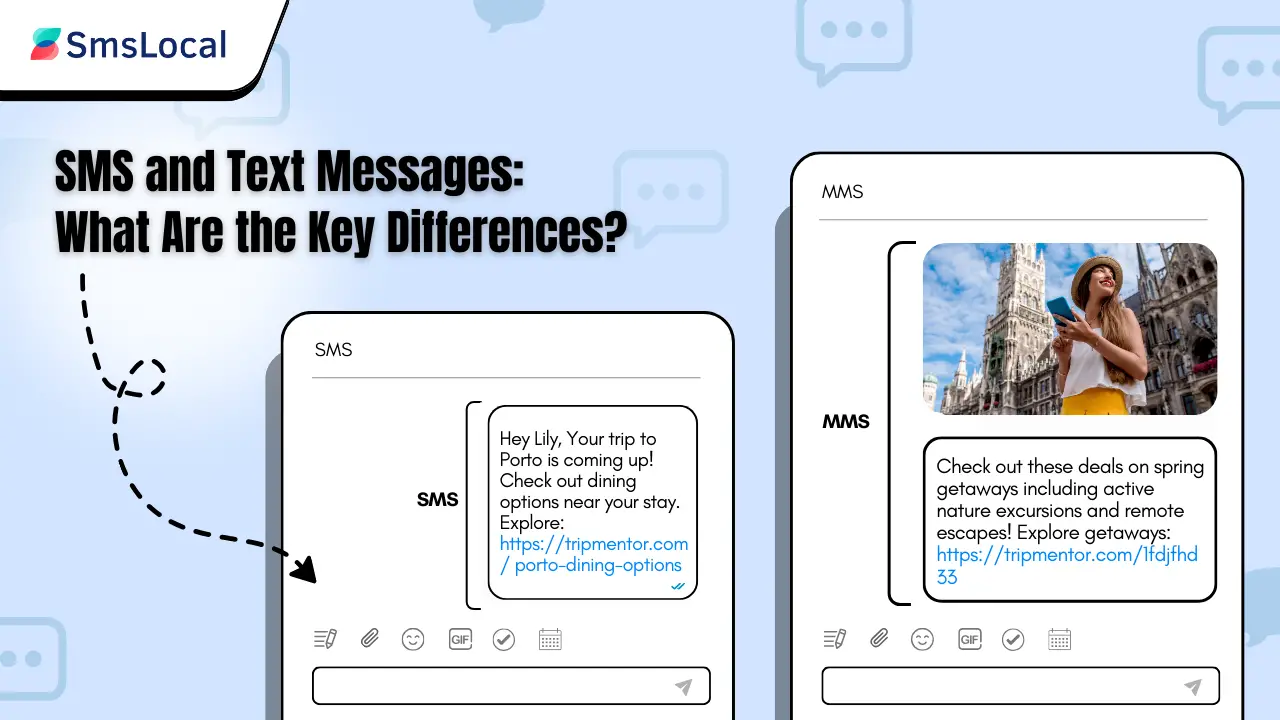
介绍
Is Your Business Using SMS messages and Text Messaging Correctly?
With 97% of Americans owning a cell phone and 85% owning a smartphone, mobile messaging has become one of the most effective ways to reach your audience. But what is SMS texting, and how does it fit into your communication strategy? Understanding SMS and its differences from other forms of 短信 is crucial to ensuring your business is using the right tool to connect with customers.
SMS texting has been a staple in digital communication since the 1990s, and its role in marketing continues to grow. At SMSLocal, we know the power of SMS in engaging customers, and we’re here to help you maximize its potential. Let’s explore the key differences and why SMS meaning remains vital in modern marketing strategies.
Understanding these messaging options is essential in a digital world where speedy information exchange is valued. While SMS focuses on sending short text messages, MMS accommodates multimedia content like images and videos. Differentiating between these services helps users decide the best way to engage with others, whether it’s through concise text updates or richer media experiences. Our familiarity with the advancements in messaging technology positions us well to adapt and capitalize on its benefits.
要点
- SMS is widely used for quick text-based communication.
- MMS allows sending multimedia content like images and videos.
- Messaging services are crucial for personal and marketing communication.
What is SMS Messaging?
SMS (Short Message Service) is a 短信 service that enables the exchange of brief text message sms, typically up to 160 characters. It works across various mobile networks, making it a fast and convenient way to send concise messages to individuals or groups.
While SMS is commonly used for personal conversations or quick exchanges, it has also become a key communication tool for businesses, both for internal and external messaging. Over time, SMS texting has evolved into an essential part of mobile communication, becoming something many of us rely on daily.
What Do SMS and MMS Mean
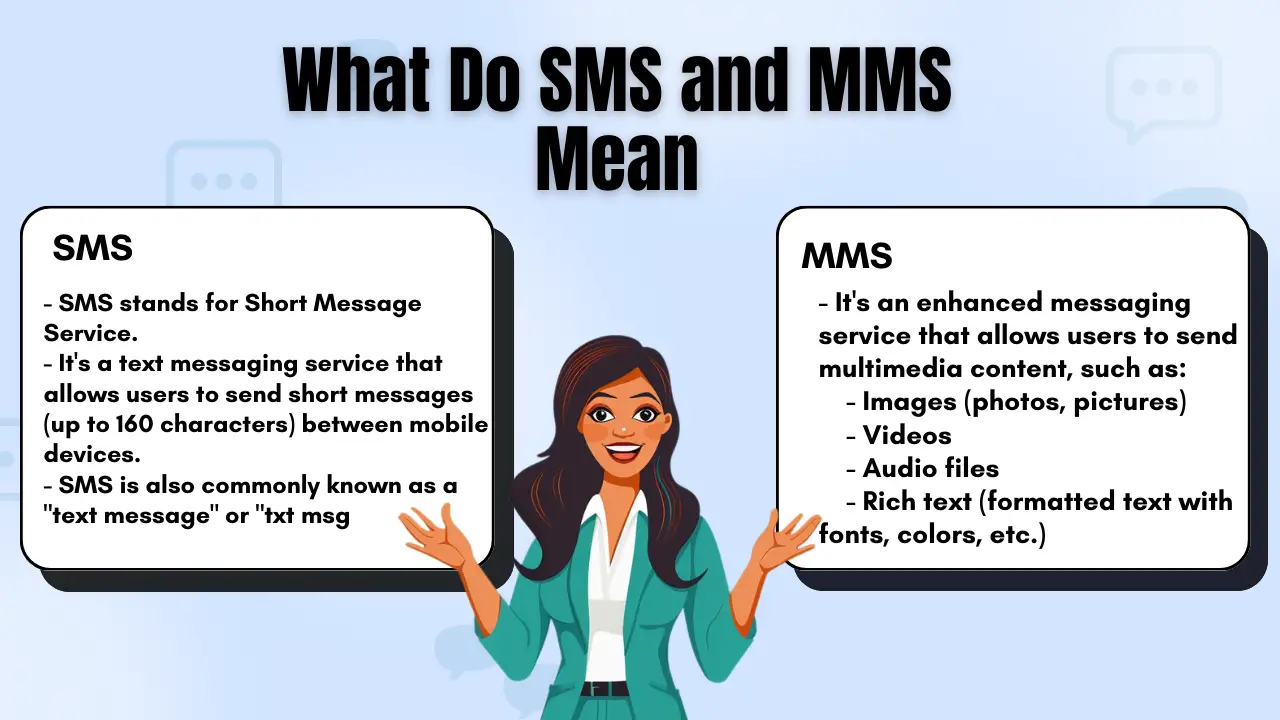
SMS, or Short Message Service, is the standard for sending text message sms. Each message is up to 160 characters long, including the spaces. This method is widely used because it’s simple and quick.
MMS, which stands for Multimedia Messaging Service, allows us to send more than just text. We can share images, videos, or audio clips using our regular cellular network. Before smartphones and apps, MMS was the go-to way to send pictures to friends and family. These services are part of how we stay connected every day.
Here’s a quick comparison:
| 特征 | 短信 | 彩信 |
|---|---|---|
| Content Type | 仅文本 | 多媒体(图像、视频、音频) |
| 字符限制 | 160 个字符 | No strict limit for content size |
| 用法 | Quick messages | Sharing media |
How Many Characters Can Messages Send?
Text messages, also known as SMS, are purely text-based and are often limited to 160 characters per message. When we exceed this limit, the message may be split into several parts. It is possible for text message sms to be split into up to 6 parts, with a combined total of 918 characters.
It’s important to note that some services may turn longer texts into picture messages, called MMS, which can be more expensive depending on the carrier. However, certain platforms, like smslocal, do not switch to MMS, even for lengthy texts.
The Differences Between SMS and Text Messaging
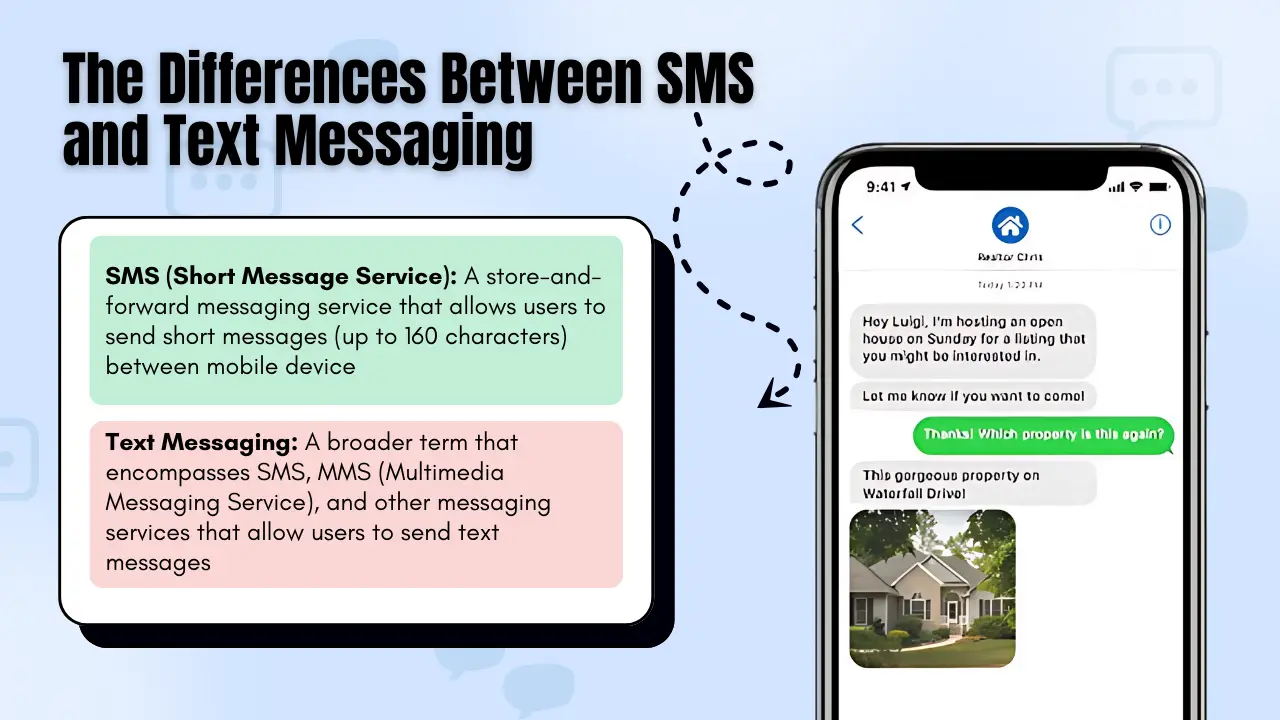
When we talk about sending messages through our phones, we often use the terms “SMS” and “text message” interchangeably. SMS, or Short Message Service, refers to a specific type of text message that is limited to 160 characters and does not include any multimedia content. In the early days of mobile phones, “SMS” was a widely used term, and people would even say they were “SMSing” someone.
Today, we commonly use the term “text” for these messages. Texts can include both SMS messages and more advanced forms like MMS (Multimedia Messaging Service), which allows users to send pictures, videos, and sounds. Despite different naming conventions, in everyday language, SMS and text messages are often understood to mean the same thing.
In some parts of continental Europe, people might still refer to these messages as sending an “SMS.” Meanwhile, in English-speaking regions like the United States, “text message” suffices to describe what SMS texting originally stood for. The evolution of this language reflects broader changes in how we use mobile messaging today.
Examples of SMS Messages
SMS messages are a powerful tool for delivering important information quickly and efficiently. Whether you’re a business, organization, or individual, SMS can serve a variety of purposes, from reminders and updates to marketing and emergency alerts. Here are some practical ways SMS messages can be used effectively:
- 预约提醒SMS reminders are a great way to ensure that customers don’t forget their scheduled appointments. A well-crafted message should include the date, time, and location of the appointment, along with any additional instructions or items to bring.
- Customer Support UpdatesWhen customers reach out to your support team, they expect timely responses. SMS messages can be used to acknowledge receipt of their request and keep them informed about the status of their inquiry or issue. These messages can provide peace of mind and help manage expectations.
- Marketing PromotionsSMS messages is an excellent channel for reaching potential customers with special offers or promotional campaigns. These messages should contain a clear call-to-action, highlight the key details of the offer, and outline any important terms or conditions. By sending relevant, timely messages, you can drive engagement and sales.
- Emergency NotificationsIn emergency situations, SMS meaning is an effective way to send urgent alerts to the community. These messages should provide clear, concise instructions on how to stay safe, what actions to take, and where to find additional resources if needed.
Key Differences Between MMS and SMS
SMS, or Short Message Service, is a type of messaging that focuses on sending brief text messages. This type of message is usually no longer than 160 characters. When it first came out, SMS was widely recognized, both as a noun and a verb. We remember when people would say they were “SMSing” a contact. Although initially intended to distinguish it from other electronic messaging types like email, today people generally refer to these messages as simply “texts.”
MMS, or Multimedia Messaging Service, allows us to send messages that include images, videos, and other media. Unlike SMS, MMS can handle larger amounts of data, giving us more room to convey richer content beyond basic text.
| 特征 | 短信 | 彩信 |
|---|---|---|
| 字符限制 | 最多 160 个字符 | No strict limit (depends on carrier) |
| Media Support | 仅文本 | Supports images, videos, audio |
In everyday language, SMS has become synonymous with text messages in many English-speaking places, even though technically, MMS extends the possibilities with multimedia content. While we may use “text” informally, knowing the difference is useful for understanding how different messages are transmitted and received.
您可能还知道:
通过可靠、快速、有效的沟通,让您的信息脱颖而出。立即提升您的短信游戏水平!
More People Than Ever Use This Technology
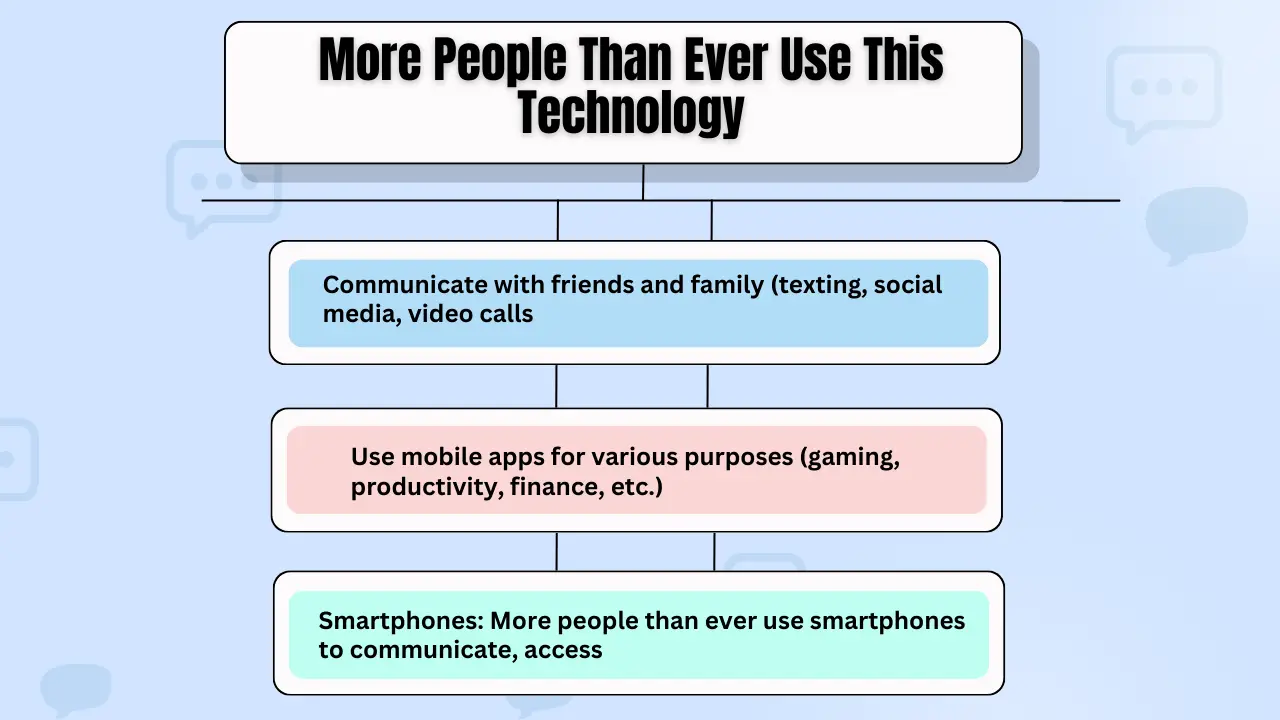
With the rise of smartphones, texting has become an indispensable part of everyday life. Even as social media and messaging apps gain popularity, SMS messages remains a leading form of communication, offering convenience, reliability, and wide accessibility. This trend is not just a passing phase—text messaging continues to dominate due to its ease of use and high engagement rates.
High Cell Phone Ownership: 83% of American adults own a cell phone, showcasing the widespread adoption of mobile technology.
Daily Texting Usage: Nearly 75% of cell phone users text daily, highlighting how integral SMS communication has become.
Average Text Volume: On average, users send and receive about 41.5 text messages per day, illustrating the frequency of texting.
Text Messaging Dominance: Despite the rise of social media and messaging apps, texting remains one of the most popular and reliable forms of communication.
Support from Cellular Networks: Cellular networks continue to efficiently handle the high volume of text messages, ensuring consistent communication.
Enduring Importance of Texting: Text messaging remains a key way to stay connected, much like it did with earlier mobile phones, making it essential for businesses and personal communication alike.
Leading Approach for Marketing with Customers
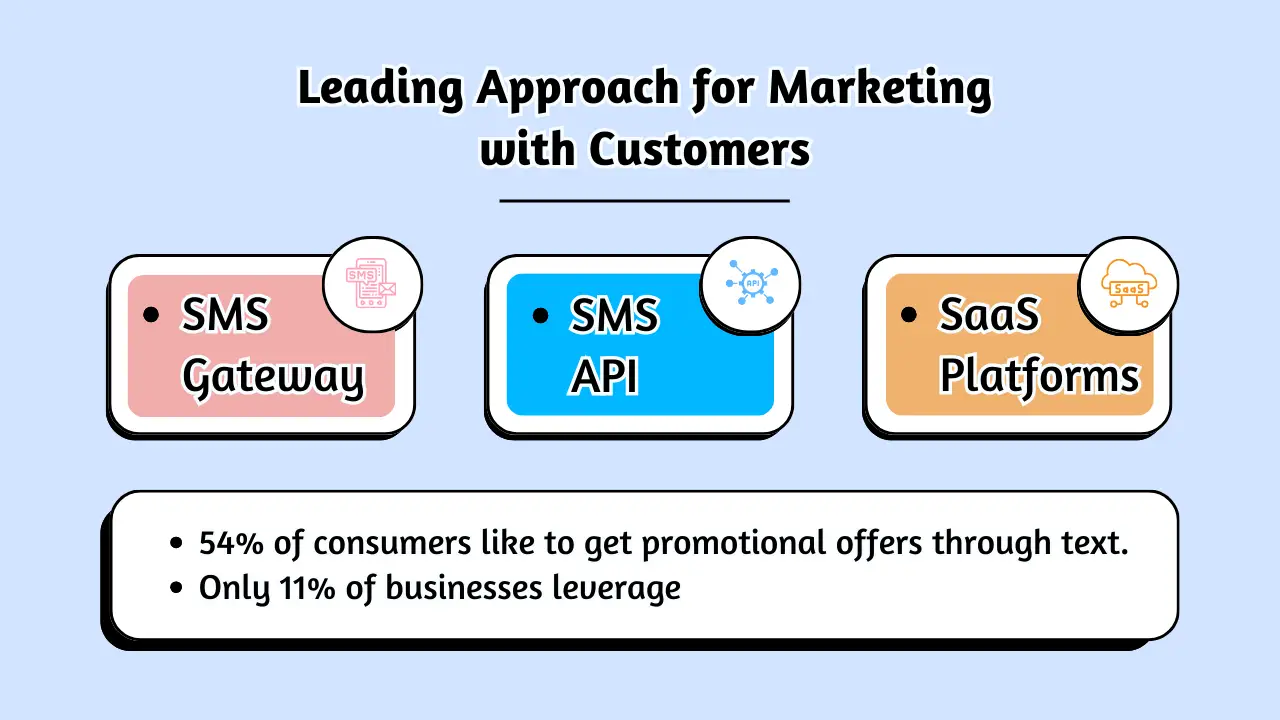
Text messaging has emerged as a leading method for reaching out to customers. The brevity of SMS messages plays a crucial role in their popularity. Customers prefer brief and direct communication, making SMS an ideal channel.
Trust in text messaging is remarkably high. Many customers view SMS as a secure communication method due to its low spam incidence. While emails have a spam rate of 53%, SMS messages exhibit a significantly lower rate of 2.8%. This helps foster confidence among consumers when they receive messages via text.
Preference for SMS
- 54% of consumers like to get promotional offers through text.
- Only 11% of businesses leverage this powerful tool.
| Statistic | Insight |
|---|---|
| 84% of consumers | Have received an SMS from a business, showing just how widely adopted SMS communication has become. |
| 82% of people | Open every text message they receive, significantly higher than the average email open rate of 22.71%. |
| Consumers aged 60+ | Check their phones at least 3 times per hour, proving that texting isn’t just for younger audiences. |
| 70% of consumers | Prefer SMS marketing as a way for businesses to grab their attention. |
| 83% of consumers | Want to receive appointment reminders via text. |
| 66% of consumers | Want to receive service reminders via text. |
| 54% of consumers | Prefer receiving promotions through SMS messages. |
| 60% of consumers | Want to be able to respond to business SMS messages, making text interactions more dynamic. |
The historical effectiveness of text messaging contributes to its popularity. Messages are not just quick but also feel personal and intimate. Texts reach us on our phones and don’t require opening an app or email client. Still, email remains indispensable in professional settings, supported by DMARC rules.
Many of us keep our phones close, increasing the likelihood of immediate interaction. SMS marketing continues to provide an excellent way for businesses to connect with their audience promptly. By tapping into the personal nature of text messaging, companies can create impactful engagements with their customers.
Texting Tools for Your Business
To set up SMS messages, you have several options:
- SMS Gateway: Services like Twilio, Clickatell, and Nexmo provide two-way communication, allowing you to send bulk messages and receive replies. These platforms are ideal for businesses looking to reach large audiences quickly and manage responses effectively.
- 短信接口: APIs such as MessageBird, Plivo, and Sinch enable seamless integration of text messaging capabilities directly into your existing software applications. This option offers flexibility and control, allowing you to automate messages and streamline customer interactions within your current system.
- SaaS Platforms: Platforms like Textlocal, Trumpia, and Zang offer user-friendly interfaces with a variety of tools to design campaigns, manage contacts, and analyze results. These solutions are perfect for businesses seeking a comprehensive, easy-to-use platform to handle their text message marketing needs.
People Prefer Texts Over Phone Calls
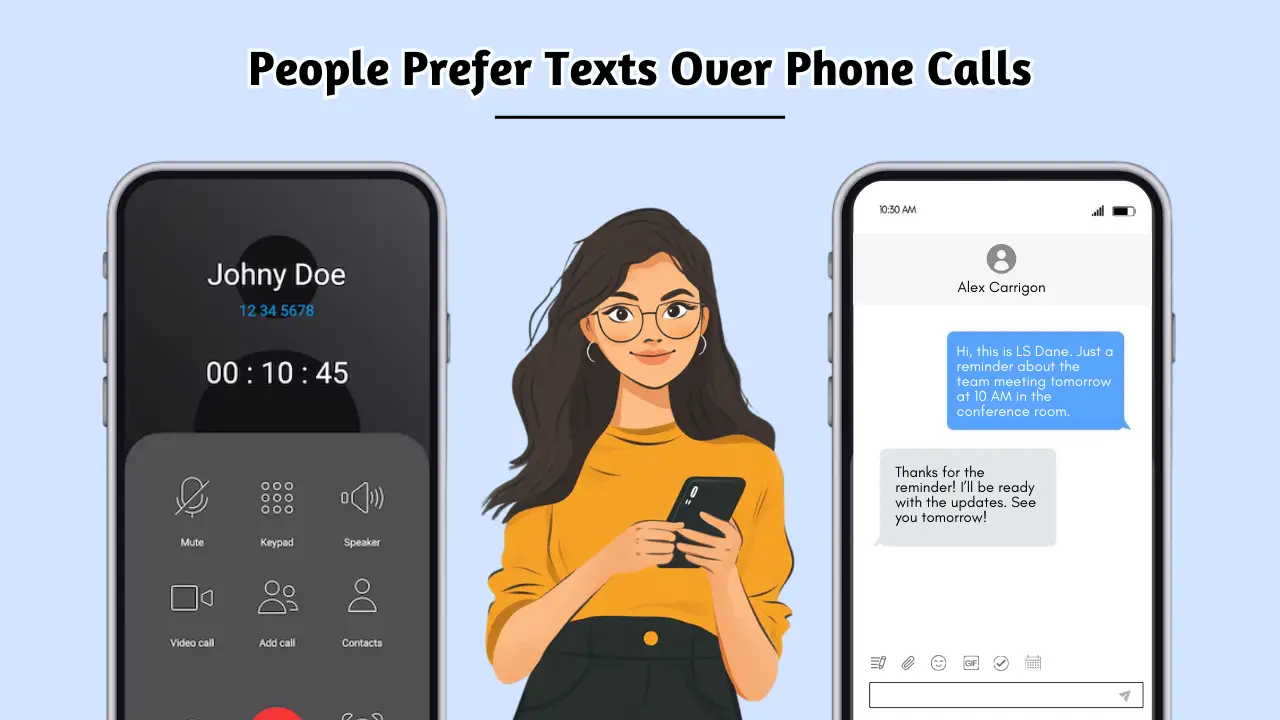
In our observations, texting has become the go-to means of communication, especially among younger generations. A significant percentage of millennials use ss extensively each day. This is likely tied to the fact that many of us grew up with this technology, making texting feel effortless and convenient.Texting offers:
- Quick and Efficient: Texting allows for fast exchanges without long conversations, making it ideal for brief updates or simple queries.
- Less Interruptive: Unlike phone calls, texts don’t demand immediate attention, allowing people to respond when it’s convenient for them.
- Flexible Response Time: Texting offers the freedom to reply at one’s own pace, making it less stressful than phone calls.
- 代际转变:伴随着短信长大的千禧一代和 Z 世代发现短信轻松便捷。即使那些早期没有发短信的人也已经采用了它。
- 全球趋势:发短信已成为一种全球通信偏好,在日本等国家很早就采用了。
- 不断发展的沟通习惯:从电话到短信的转变凸显了技术如何重塑沟通方式,使短信成为更高效、更受欢迎的选择。
即使是那些年轻时没有发短信的人也已经接受了它。我们注意到世界各地都出现了消息传递的转变,早期的案例出现在日本等地。因此,发短信不仅成为一种趋势,而且明显优于电话交谈。这种变化清楚地证明了沟通习惯是如何随着技术进步而演变的。
短信的未来
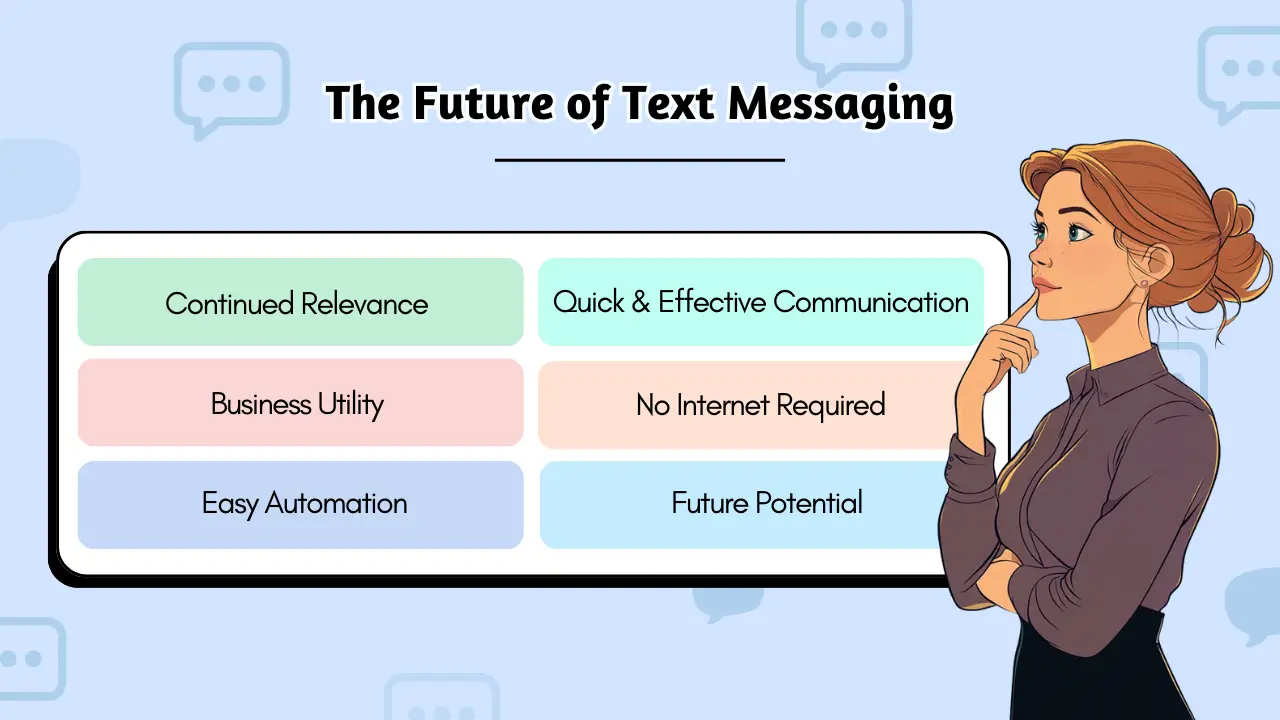
即使 4G 和 5G 等快速互联网技术兴起,短信仍然保持相关性并持续增长。虽然这些技术使传输大文件变得更加容易,但许多人仍然看重短信发送快速信息的简单、直接的方式。这使得短信成为满足个人和专业需求的绝佳工具。
在商业中,短信已成为营销策略的重要组成部分。公司用它来让客户了解他们关心的产品和服务的最新情况。他们发送会议提醒并直接通过自动化系统分享重要的工作细节。短信的美妙之处在于它的简单性和适应性。无需互联网连接即可发送消息,因此可以随时随地访问。
短信很容易集成到自动化系统中,使企业能够轻松有效地进行沟通。只要人们需要快速、简单的沟通,短信仍然是必不可少的。因此,让我们拥抱它的潜力,并考虑今天开始我们自己的短信营销之旅!
结论
当我们探索短信和短信时,了解它们在当今世界的差异和功能非常重要。 SMS 代表短消息服务,是一种用于通过蜂窝网络交换简短消息的协议。由于其简单的方法和在全球大多数移动设备上的可用性,它是一种可靠的通信方式。
相比之下,“短信”一词更为笼统。它包括短信,但也指使用基于互联网的消息服务发送的消息。这些服务可能支持图像和视频等丰富的多媒体,这与仅限于文本的短信不同。
SMS 与短信:要点
- 技术:短信使用蜂窝网络,而短信可以包括基于互联网的应用程序。
- 内容:短信仅支持最多160个字符的文本;文本消息可以处理多媒体。
- 成本:传统短信可能会按每条消息收取费用,但许多现代短信服务使用数据或 Wi-Fi,这可能更经济,具体取决于用户的数据计划。
了解这些区别可以帮助用户选择最适合其需求的通信方法。要对 SMS 和短信进行更深入的比较,请探索 SMSLocal 提供的分析。让我们确保使用正确的工具来有效沟通!
在 SMSLocal,我们提供可靠且易于使用的短信解决方案,帮助您与受众建立联系。今天就与我们一起开始您的短信营销之旅
常见问题解答
是的,SMS(短消息服务)和短信通常可以互换使用。 SMS 是通过蜂窝网络发送短文本消息的技术术语,而“文本消息”是一个更通用的术语,可以指设备之间发送的任何类型的书面消息,包括 SMS 和通过基于互联网的应用程序发送的消息。
SMS 代表短消息服务,它是用于通过蜂窝网络在移动电话之间发送文本消息的协议。 “短信”一词通常用于描述 SMS,但它也可以包含其他形式的消息传递,包括通过 iMessage 或 WhatsApp 等不使用 SMS 协议的应用程序发送的消息。
SMS(短消息服务)是一种通过蜂窝网络发送短文本消息的系统,通常限制为 160 个字符。它广泛用于个人和商业通信,并且适用于几乎所有移动电话。
术语“文本消息”和“SMS 消息”通常可以互换使用,但“文本消息”是一个更广泛的术语,可以指任何基于文本的通信。 SMS 特指通过蜂窝网络发送的消息,长度不得超过 160 个字符,而文本消息也可能包括通过 iMessage 或 WhatsApp 等基于互联网的服务发送的消息。
SMS消息是指通过蜂窝网络使用短消息服务协议发送的短消息。它是一种基本的纯文本通信方法,用于个人、商业和营销目的。
当您在短信上看到“SMS”时,通常表示该消息是使用短消息服务协议发送的。这是在手机之间发送短信的传统方法,而不是通过 iMessage 或 WhatsApp 等基于互联网的平台发送消息。
在 Android 上,SMS 特指通过蜂窝网络发送的传统文本消息,而 WhatsApp 或 Facebook Messenger 等其他形式的消息传递则使用互联网数据而不是蜂窝网络。 SMS 是一种更基本的纯文本通信形式,而 Android 上的消息传递应用程序可以包含图像和视频等多媒体功能。